
You have 15 agency tabs open, and they all look… nice. Their websites are slick. Their portfolios are colorful. But how do you tell a true strategic partner from a “pixel-pusher”? When you’re not a designer, evaluating design work feels impossible.If you’re still unclear about what a UI/UX design agency actually does beyond “making things look good,” our explainer on what a UI/UX design agency does breaks down their real responsibilities, deliverables, and impact on business outcomes.
Here’s the problem: You’re about to spend thousands (or lakhs) on a high-stakes decision, and you’re afraid you’ll make the wrong choice based on a “pretty” design that doesn’t actually work. Maybe you’ll pick an agency because their website has smooth animations, or because their portfolio has that trendy glassmorphism effect. But will they actually solve your business problem?
We’re giving you our internal playbook. This article is part of our 2025–26 Ultimate Guide on how to hire the right UI/UX design agency in India, where we break down the entire decision-making process – from shortlisting to pricing – step by step.
Your 5-Point Agency Scorecard (The Quick Checklist)
Before we dive deep, here’s the framework that will guide everything else in this article. You can use this scorecard to grade any agency on a scale of 1-5 points for each criterion:
The 5-Point Agency Scorecard
- Case Study Process: Do they show how they got to the solution? (Not just the final, polished screens)
- Case Study Impact: Do they show real business metrics? (Like conversion rates, not just “the client loved it”)
- Industry & Tech Fit: Have they solved your kind of problem? (Experience in your vertical and tech stack)
- Team & Expertise: Who exactly will be working on your project? (Names, not promises)
- Credibility & Reviews: What do their past clients say? (Specific testimonials, not vague praise)
By the end of this guide, you’ll know exactly how to score each agency and confidently narrow your list from 15 options to 3 serious contenders.
Deep Dive #1: Process over Polish (How to Really Read a Case Study)

This is the most important section. If you remember nothing else from this article, remember this: A beautiful final design tells you almost nothing about an agency’s ability to solve your problem.
Red Flag: The “Dribbble-ization” of Portfolios
Many agencies just show the final, beautiful screen. They’ll have five or six gorgeous slides showing a sleek app interface, perfect typography, and a color palette that would make any designer jealous. This is a “gallery,” not a case study. It tells you nothing about their ability to solve a problem.
It’s the equivalent of a chef showing you a photo of a plated dish without telling you the recipe, the ingredients, or even what problem the dish was solving (Was the client hungry? Allergic to gluten? Hosting a dinner party?). Pretty, but useless.
Green Flags: What a Great Case Study Must Include
A real case study walks you through the journey. Here’s what it must include:
The “Before” State: What was the clear business problem? A great case study starts with specificity. Not “the user experience was bad,” but “the client’s checkout-page drop-off was 60%, costing them $200K in lost revenue annually.”
The Research: Who did they talk to? You should see evidence of user personas, interview snippets, or survey data. If the case study jumps straight from “problem” to “beautiful solution,” that’s a red flag. Real design is informed by real humans.
The Messy Middle (The Most Important Part): Show us the wireframes! Show us the failed ideas! A good partner shows their workings. This is where you see the agency’s actual problem-solving ability. Did they explore multiple directions? Did they test and iterate? Or did they just go straight to the “pretty” version?
This messy middle is what you’re actually paying for. The final polished UI is just the byproduct of good thinking.
The “After” State: Finally, yes, show us the final polished UI. But by now, you understand why it looks the way it does.
If you’re not sure what “wireframes” or “user personas” are, don’t worry. Our guide on the key deliverables of a UI/UX agency explains them all.
Deep Dive #2: Impact over “Awards” (Finding the Real Metrics)

Any agency can make a design. A partner can improve your business. There’s a crucial difference, and it shows up in the numbers.
Look for Business Metrics (The “Money” Metrics)
These are the metrics that your CFO or CEO cares about:
- “+25% increase in conversions”
- “-40% reduction in user drop-offs”
- “+15% higher Average Order Value (AOV)”
- “Reduced customer acquisition cost by ₹300 per user”
- “Increased daily active users by 35%”
Notice how specific these are. They’re not “improved the user experience” or “made it more intuitive.” They’re hard numbers that tie directly to revenue or cost savings.
Look for User Metrics (The “Happiness” Metrics)
These are the metrics that prove the design actually works for real humans:
- “Task completion rate improved from 50% to 90%”
- “Time-on-task reduced by 30 seconds”
- “Customer satisfaction score increased from 3.2 to 4.6”
- “Support tickets related to navigation dropped by 60%”
Both types of metrics matter. Business metrics prove ROI. User metrics prove the design isn’t just faster, it’s actually better.
What if a Case Study Has No Metrics?
This is a yellow flag. Not every project can be measured perfectly, and sometimes clients don’t share data. But if an agency’s entire portfolio lacks metrics, that’s a pattern.
Ask them about it on the call. The best agencies are proud of their data. They’ll volunteer these numbers before you even ask. A lack of data might mean the project wasn’t successful, or they’re just a “design” shop, not a “results” shop.
Deep Dive #3: Industry & Tech Stack Fit

Why Industry Fit Matters (Sometimes)
A beautiful e-commerce portfolio doesn’t automatically mean they can design a complex B2B SaaS dashboard. The user behaviors are different. The business models are different. The success metrics are different.
If you’re in FinTech, look for FinTech experience. The agency needs to understand regulatory constraints, security concerns, and the specific trust-building elements that financial products require. If you’re in HealthTech, you need someone who understands HIPAA compliance and the sensitivity of medical data.
That said, don’t be too rigid. Location can also influence collaboration style, cost structures, and domain exposure. If geography matters to you, we break this down in detail in our guide on how to choose a UI/UX agency in Bangalore, Mumbai, Delhi, and beyond. An agency with strong process and proven results can often adapt to a new industry. But they should demonstrate curiosity and ask you smart questions about your domain during initial conversations.
Don’t Forget the Tech Stack
This is a small but vital point. If your development team works in Figma and uses React, and the agency only uses Sketch with a handoff process built for Angular, you’re setting yourself up for a painful handoff.
Ask during your first call:
- What design tools do you use?
- How do you handle developer handoff?
- Have you worked with our tech stack before?
A mismatch here isn’t necessarily a dealbreaker, but it’s something you need to discuss upfront.
Deep Dive #4: Team & Expertise (Who Are You Actually Hiring?)
The “Bait and Switch” Red Flag
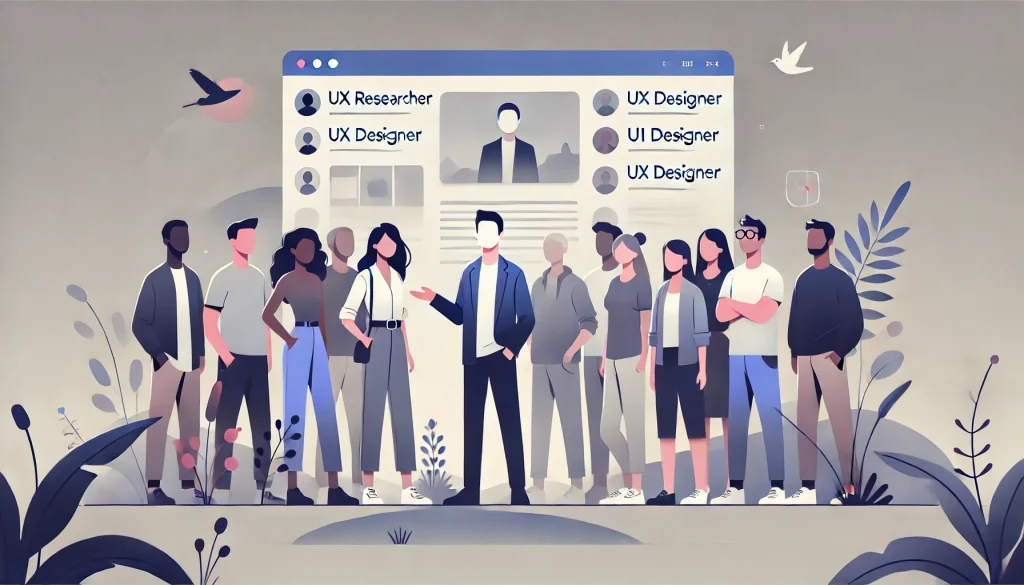
Here’s a scenario that happens too often: You get wowed by the CEO or Creative Director on the sales call. They show you brilliant work. They say all the right things. You sign the contract. Then your project gets handed off to a junior team that just joined the agency three months ago.
This is a huge risk, and it’s more common than you’d think.
What to Ask
Be direct. These questions might feel awkward, but they’re completely reasonable:
- “Who, by name, will be the Design Lead on my project?”
- “Can I see their specific work or speak to them before we proceed?”
- “What’s the ratio of senior to junior designers on your team?”
- “Will the person I’m speaking with now be involved in my project? If so, how much?”
A confident agency will answer these questions gladly. They’ll introduce you to the actual team. An evasive answer is a red flag.
You’re not hiring the agency’s best work from three years ago. You’re hiring the specific humans who will work on your project next month.
Deep Dive #5: Credibility (How to Read Reviews)
Are Clutch/G2/GoodFirms Reliable?
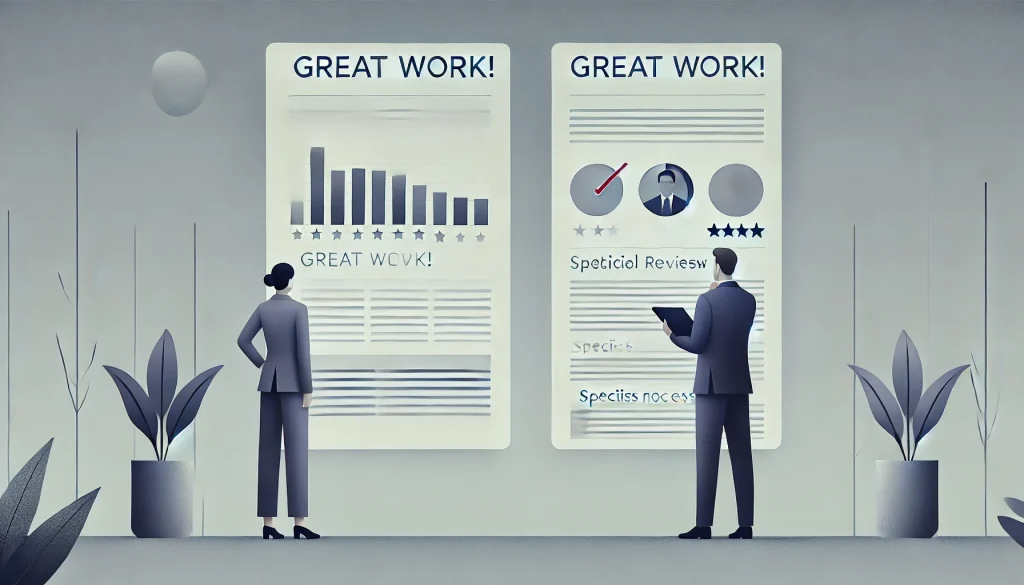
Yes, but with a grain of salt. These platforms verify reviews and make it difficult (though not impossible) to game the system. A 4.8+ rating with 20+ reviews is a genuinely good sign. It shows consistency.
But don’t stop there. A high rating tells you an agency is probably reliable. It doesn’t tell you if they’re the right fit for your specific problem.
How to Really Read a Testimonial
Not all testimonials are created equal. Here’s the difference:
Bad Testimonial: “They were great to work with! Highly recommend.”
This tells you nothing. Great at what? Why? Would you hire a plumber based on “they were great”?
Good Testimonial: “They challenged our assumptions about user onboarding, delivered on time despite a tight deadline, and the new flow they designed increased our sign-ups by 30%. Their research phase uncovered insights our internal team had missed.”
This is specific. It mentions process (challenged assumptions, research), reliability (on time), and results (30% increase).
Ask for References
A good agency will gladly connect you with 2-3 recent clients. Don’t just ask “Would you recommend them?” Ask harder questions:
- “What was the most challenging part of working with this agency?”
- “Did they hit their deadlines?”
- “How did they handle disagreements or changes in scope?”
- “Would you hire them again for your next project?”
The answer to that last question tells you everything.
From 15 Agencies to a Shortlist of 3
You’ve done the research. You’ve scored each agency on the 5-point scorecard. You’ve read their case studies with a critical eye. You’ve checked their reviews and maybe even spoken to a reference or two.
Now it’s time to narrow your list. You should have 3-5 agencies that scored well across all criteria. These are the ones you’ll engage with seriously.
Use our ultimate shortlisting checklist from the main guide to prepare your RFP and schedule your first calls. But before you get on that call, you need to talk about money. Our detailed breakdown of UI/UX design costs and packages in India for 2025–26 will help you understand what you’re actually paying for—and what’s worth it. Our guide to UI/UX pricing and packages will prepare you for that conversation.
The Big Takeaway
Don’t hire a “vendor”; hire a partner. A vendor agrees with everything you say. They take your requirements document and execute it, no questions asked.
A partner will challenge your assumptions, push back (respectfully), and be just as obsessed with your business metrics as you are. They’ll tell you when your idea won’t work. They’ll propose solutions you hadn’t considered. They’ll show you data that changes your mind.
The portfolio that should impress you isn’t the one with the flashiest designs – it’s the one with the clearest process and the most boring (but beautiful) business charts. Those conversion rate graphs and task completion metrics? That’s what good design actually looks like.
Used our scorecard and think we pass the test? See our (metric-driven) case studies here.
Your Questions Answered (FAQs)
What should I look for in an agency portfolio?
In one sentence: Look for process, not just polish. A good portfolio shows the messy wireframes and user research (the “how”), and the final business results (the “why”), not just the pretty final screens.
How to tell if a case study is credible?
A credible case study has data. It should state a clear business problem (like “low conversion”) and provide a clear, metric-based result (like “+30% conversion”). If it’s all just concept work or pretty pictures, it’s not a credible case study.
Are Clutch/GoodFirms reviews reliable indicators?
They are a very good starting point. Because reviews are verified and hard to remove, a high rating (4.8+) is a strong signal of consistency. But you should always back this up by asking for 2-3 direct client references.
What’s a bigger red flag: a bad review or a portfolio with no metrics?
Both are bad, but a portfolio with no metrics is often worse. A bad review could be a one-time “bad fit” client. But a portfolio with no metrics, repeated over and over, suggests the agency never measures their work, or their work doesn’t produce results.