
You’ve probably heard the terms “UI” and “UX” thrown around in meetings or pitches. Maybe you’ve nodded along, pretending to understand the difference. But when it comes to actually hiring a UI/UX agency, the confusion sets in. What do they actually do all day? Why should you pay for it? And how does any of this impact your bottom line?
In this guide, we’ll explain what UI and UX are, walk you through what an agency actually does during a project, and show you exactly how their work translates to real business results. The 2025–26 Ultimate Guide: How to Hire the Right UI/UX Design Agency in India.
What’s the Difference Between UI and UX?
Let’s start with the basics. Think of your favorite restaurant for example.
UX (User Experience) is the entire journey. It’s the ease of finding parking, how quickly you’re seated, whether the menu is readable in the lighting, the attentiveness of your waiter, how long you wait for food, the ambiance, and even how smoothly you can pay and leave. It’s everything that shapes your overall experience.
UI (User Interface) is what you directly interact with. It’s the physical menu’s design, the style of the decor, the color of the plates, the typography on the sign out front. It’s the visual and tactile elements you touch and see.
A beautiful UI (a gorgeous restaurant interior) can’t save a terrible UX (rude service, cold food, confusing layout). But when both work together seamlessly, you get a five-star experience that keeps customers coming back.
So, What Does a UI/UX Agency Actually Do All Day?
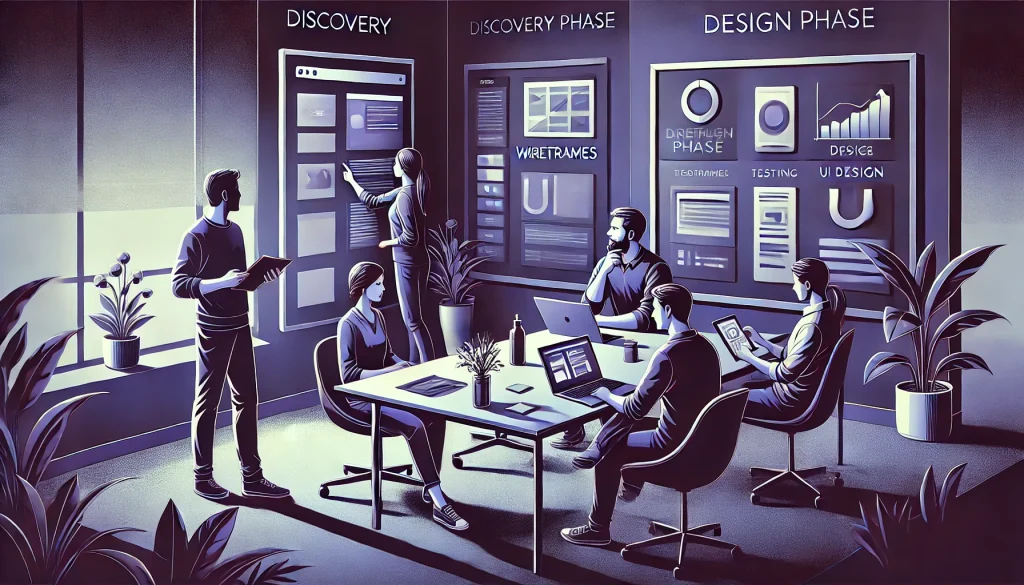
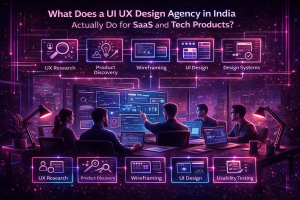
A good agency doesn’t just make things look pretty. They follow a strategic journey with four distinct phases.
Phase 1: They Start with “Why?” (Discovery & User Research)
An agency doesn’t fire up Photoshop on day one. Instead, they become experts on your business and, more importantly, your users. They dig deep to understand who your customers are, what problems they’re trying to solve, and where your current product is falling short.
This phase includes conducting user interviews, analyzing your competitors, and creating detailed user personas. These aren’t just demographic profiles; they’re rich, research-backed representations of your actual users, complete with their goals, frustrations, and behaviors.
Phase 2: They Build the Blueprint (Wireframes & Prototypes)
Just like an architect blueprints a house before pouring concrete, an agency blueprints your app or website before designing a single pixel. They map out user flows, which are the paths users take to accomplish their goals. Then they create wireframes, which are low-fidelity sketches of each screen.
At this stage, everything is intentionally rough. Wireframes are typically black-and-white, focusing purely on layout, hierarchy, and functionality. Why? Because it’s easier to change a sketch than to rebuild a finished design. This phase is all about getting the structure right.
Phase 3: They Bring It to Life (UI Design & Branding)
This is the “UI” part most people picture when they think of design. Now the agency applies colors, typography, imagery, and your brand identity to those wireframes. They transform the blueprint into something beautiful and on-brand.
The deliverables here include high-fidelity mockups (what the final product will look like), style guides, and UI kits. A UI kit is essentially a “Lego set” for your developers, containing all the reusable components, buttons, forms, and design patterns they need to build consistently.
Phase 4: They See If It Actually Works (Usability Testing)
This is arguably the most crucial step, and it’s where many companies try to cut corners. The agency puts the design in front of real users (not you, not their team, not your mom) and watches what happens. Where do people get confused? What do they click on that isn’t clickable? What makes them abandon the process?
Then, based on these insights, they iterate and fix the problems. This cycle of testing and refinement is what separates a good design from a guessed design.
Why UX Matters: The Business Case for Good Design

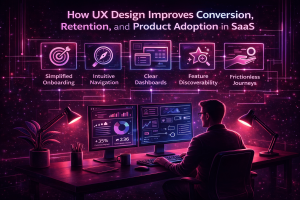
Here’s how each phase of the agency process translates directly to business results.
Good UX Slashes Your Development Costs
Finding a problem in a prototype during Phase 2 is roughly 10 times cheaper than discovering it after your developers have already built it. Every hour your agency spends testing and refining the design saves you days (or weeks) of expensive developer time down the line.
Good UX Skyrockets Your Conversion Rate
A clear, frictionless path to “checkout,” “sign up,” or “book now” means more users complete the action. Even small improvements compound dramatically. Improving your conversion rate from 2% to 3% might not sound impressive, but that’s a 50% increase in revenue from the same traffic. Good UX agencies obsess over removing friction at every step.
If you’re wondering what this level of strategic design work typically costs in India, here’s a detailed breakdown of UI/UX design pricing and packages.
Good UX Creates Loyal Fans (Higher Retention)
When an app or website feels good to use, people come back. They recommend it to friends. They forgive the occasional bug. This dramatically lowers your churn rate and increases customer lifetime value. Retention is often more valuable than acquisition, and good UX is your retention superpower.
When Do You Need an Agency vs. In-House or a Freelancer?
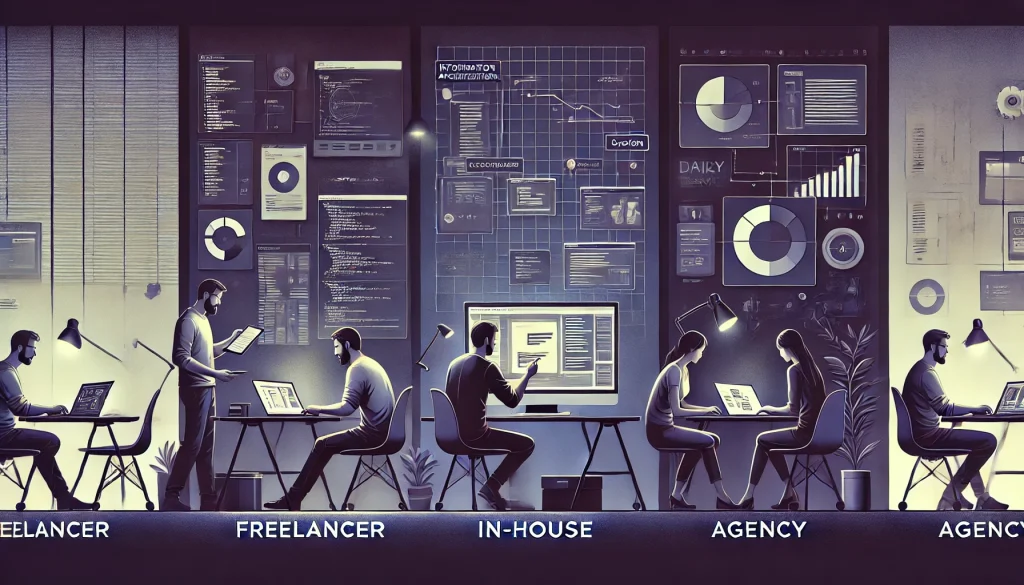
Not every situation calls for an agency.
- Hire a freelancer when you have a small, specific task. Need three screens redesigned? Want a set of custom icons? A talented freelancer can knock this out quickly and affordably.
- Build an in-house team when design is core to your product. If you’re a SaaS company or your product is primarily digital, you likely need designers in your team full-time, working alongside engineers daily.
- Hire an agency when you need a full expert team immediately, you’re launching something complex that requires strategy and research, or you need an outside, unbiased perspective. Agencies bring specialized expertise across research, strategy, UI design, and testing that would take months to assemble in-house. For location-specific guidance, see our article on How to Choose an Agency in Bangalore, Mumbai, Delhi & Beyond.
If you’re comparing agencies across different Indian cities, this guide explains how to choose the right UI/UX agency in Bangalore, Mumbai, Delhi NCR and other major hubs.
What Deliverables Should You Actually Get from an Agency?

Below is a practical checklist of what to expect and request:
- User Personas & Journey Maps: Who your users are and how they currently navigate your product
- Information Architecture: A sitemap showing how everything connects
- Wireframes:The structural blueprint of each screen
- An Interactive Prototype: A clickable version you can test before building anything
- A Final UI Kit or Design System: All the visual components your developers need
- Usability Testing Reports: Data showing how real users interacted with the design and what was changed as a result
If an agency isn’t offering these (especially research and testing), ask why. For a complete evaluation framework, see our guide on How to Evaluate and Shortlist UI/UX Agencies.
The Bottom Line
Hiring a UI/UX agency is an investment in a strategic partner who brings deep empathy for your users and a proven process to connect that empathy directly to your business goals.
Good design is good business. It’s not a cost center; it’s one of the best investments you can make in your product’s future. Every dollar spent on getting the design right saves ten dollars in development costs, customer support tickets, and lost conversions. For detailed pricing insights, see UI/UX Design Cost & Packages in India (2025–26): What You’ll Actually Pay.
Your Questions Answered
What is the difference between UI and UX?
In short: UX is the entire experience a user has with your product, while UI is the specific visual interface they interact with. Think of UX as the “journey” and UI as the “vehicle.” You need both working in harmony to create something people love.
When should a company hire a UI/UX agency?
You should hire an agency when you’re launching a new digital product, experiencing poor conversion rates or high drop-off on an existing one, or when you need specialized expertise your in-house team lacks. If users are frustrated or you’re losing money to bad design, it’s time.
Can’t I just use a website template and save money?
You can, but templates are built for everyone, which means they’re optimized for no one. A template can’t do user research for your specific customers, fix your unique business flow, or adapt based on user testing. It’s a short-term fix for what should be a long-term strategic advantage.
Will the UI/UX agency also build (code) my app or website?
It depends. Some agencies are “full-service” and have developers on staff. However, most specialized UI/UX agencies focus exclusively on design and strategy, then hand off developer-ready files to your engineering team. Always clarify this upfront.
How long does a simple UI/UX project take?
While a complex app can take months, a smaller project like a 5-10 page website or a simple app’s core flow can often be researched, designed, and tested in 6-10 weeks. The timeline depends on the scope, but the key phases (discovery, design, and testing) remain consistent.