

The Future of UI infused with AI
Just when we were finally getting the hang of the incredible use cases of AI, intelligent conversational UIs made a grand entry, shaking up the SaaS industry.
User communication could not get any better in SaaS platforms, thanks to conversational UIs. These are redefining SaaS platforms with the help of AI technology by offering users faster, more natural, and more interactive ways to complete tasks.
Instead of forcing users to navigate through multiple menus, dashboards, and settings, conversational interfaces allow them to communicate with software using natural language.
This shift is especially important for SaaS products because modern platforms often contain dozens of features. A conversational interface can act as an intelligent layer between users and those features, helping them find information, complete tasks, and understand the product more easily.
Now you might be wondering what exactly a conversational UI is, how it works, and what impact it can have on a SaaS product.
Let’s explore it.
What is a Conversational UI?
A conversational UI is an interface that allows users to interact with software through natural language. Instead of relying entirely on traditional menus, buttons, forms, and navigation systems, users can communicate with the product through text or voice.
Chatbots, AI assistants, voice interfaces, virtual assistants, and AI-powered search experiences are common examples of conversational interfaces.

For SaaS products, conversational UI can be used for:
- Customer support
- Product search
- Intelligent recommendations
- Data queries
- Task automation
- Onboarding
- Troubleshooting
- Report generation
- Workflow assistance
- Account management
Conversational UIs can make software easier to interact with, particularly when users are unfamiliar with complex workflows.
How Does Conversational UI Work?
As the name suggests, users communicate with the interface instead of navigating through every step manually.
For example, instead of opening multiple screens to create a meeting, a user could type:
“Schedule a meeting with the marketing team tomorrow at 2 PM.”
The system interprets the request, identifies the required action, asks for missing information if necessary, and then performs the task.
Behind this experience, several technologies work together.
Natural Language Processing
Natural Language Processing (NLP) helps the system understand human language, including questions, commands, and conversational context.
Machine Learning
Machine learning can help systems identify patterns from interactions and improve responses over time.
Large Language Models
Modern conversational SaaS experiences can also use large language models (LLMs) to understand complex questions, generate responses, summarize information, and assist with more flexible conversations.
APIs and SaaS Integrations
The conversational layer also needs access to the underlying product. APIs and integrations allow the AI system to retrieve information or perform approved actions within the SaaS application.
This is important because a chatbot that can only answer questions is very different from an AI assistant that can actually help users complete tasks.
Benefits of a Conversational UI in SaaS
Now that we understand how conversational interfaces work, let’s look at their potential impact on SaaS products.
Top-Notch Customer Experience
Conversational UI can make SaaS products feel more accessible and intuitive.
Instead of searching through documentation or navigating several screens, users can simply ask a question in their own words.
For example:
Traditional experience:
Dashboard → Settings → Account → Billing → Invoice
Conversational experience:
“Show me my latest invoice.”
This reduction in navigation friction can make everyday tasks easier.
For SaaS businesses, this also creates an opportunity to improve SaaS UX design by making complex functionality easier to discover.
Reduces Workload for Human Staff
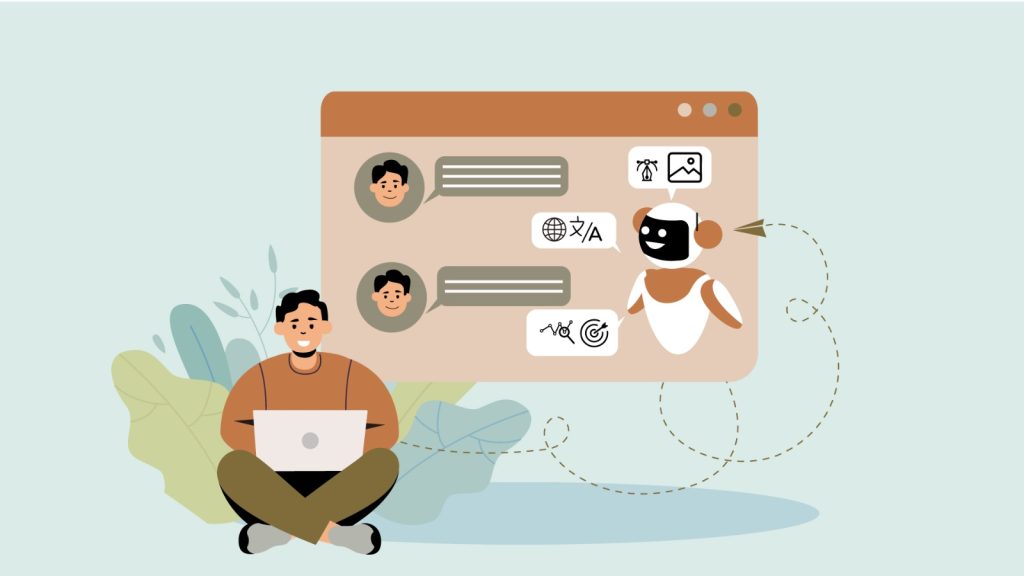
AI-powered conversational interfaces can handle repetitive questions and common support requests at scale.
They can help users with:
- Frequently asked questions
- Basic troubleshooting
- Account information
- Product navigation
- Documentation
- Feature explanations
- Common workflow questions
However, AI should not completely replace human support.
When a request becomes sensitive, complex, or outside the AI’s capabilities, the system should provide a smooth human handoff.
This creates a hybrid support model where AI handles repetitive requests while human teams focus on situations that require judgment and empathy.
Increases Conversions
Conversion is closely connected to engagement and user confidence.
A conversational interface can answer questions at the moment users need help, recommend relevant features, explain pricing or functionality, and guide users toward the next step.
For example, a prospective customer might ask:
“Which plan is suitable for a team of 20?”
Instead of searching through pricing pages, the conversational interface can explain the available options and guide the user toward an appropriate next step.
This can reduce friction throughout the SaaS conversion funnel.
Data Collection and Insights
Conversational interfaces can generate valuable qualitative information about users.

Users naturally reveal:
- What they are trying to accomplish
- Where they are getting stuck
- Which features they need
- What questions they repeatedly ask
- Which workflows are confusing
- What problems they encounter
When analyzed responsibly, these conversations can provide product teams with useful insights.
For example, if thousands of users repeatedly ask how to complete the same task, that could indicate an opportunity to improve the product’s UX rather than simply adding another help article.
The Role of AI in the Development of a Conversational UI
AI plays a very important role when we talk about the development of a conversational UI.
The three AI technologies that pull the strings from the background are Natural Language Processing (NLP), Machine Learning (ML), and Deep Learning (DL).
These are the secrets behind making a chatbot or virtual assistant truly intelligent. NLP algorithms help them converse like humans and not sound too robotic.
Machine learning algorithms allow these chatbots and virtual assistants to teach themselves by analyzing the data they collect.
Deep Learning algorithms take things to the next level, using this, conversational AIs translate different languages, understand human emotions, and simplify various complicated tasks.

This is how AI is changing the game for conversational UIs, making them smarter and more efficient in SaaS platforms.
Final Thoughts
AI conversational interfaces are changing how people interact with SaaS products.
They can simplify complex workflows, improve support, personalize experiences, accelerate onboarding, increase feature discovery, and provide valuable insights into user needs.
However, successful conversational UX requires more than adding an AI chatbot.
The experience needs a clear purpose, reliable information, thoughtful interaction design, privacy safeguards, human oversight, and seamless integration with the existing product.
When these elements come together, conversational AI can become a powerful part of a modern SaaS product—helping users get things done faster while creating a more intelligent and human-centered experience.
Experience AI excellence with f1Studioz’s SaaS Solutions
F1Studioz helps businesses design user-centered SaaS products by combining UX strategy, research, interaction design, visual design, and front-end development.
The team can help businesses create intuitive SaaS interfaces, AI-powered experiences, conversational workflows, and scalable digital products.
Explore F1Studioz’s SaaS UI/UX Design to learn more about its approach to SaaS product design.
You can also explore F1Studioz’s work and case studies to see examples of digital products and experiences created for businesses across different industries.
Into Better SaaS Experiences.