
Imagine a customer named Riya. She searches Google for a project management tool, reads a few comparison articles, and clicks an ad on social media. She starts a free trial, gets stuck during setup, emails support, and finally decides whether to pay. Every one of those moments shapes how she feels about the brand. A customer journey map is a visual representation of that entire experience, showing what a customer does, thinks and feels at each stage of their relationship with a business. This guide explains what it is, why it matters, and how to create one step by step.
What Is a Customer Journey Map?

A customer journey map is a visual diagram that shows the steps a customer takes to achieve a goal with your brand, from first discovery to long-term loyalty. It combines what customers do with what they think and feel, so teams can see the experience through the customer’s eyes rather than their own.
Customer Journey Map Meaning in Simple Words
In simple words, a journey map is a story of one customer’s experience, told stage by stage. It answers one question: what is it actually like to do business with us?
What Does a Journey Map Show?
A good journey map shows the customer’s goals, actions, touchpoints, thoughts, emotions, pain points and the opportunities to improve. Together, these reveal where the experience works well and where it breaks down.
Simple Example of a Customer Journey
Take a customer buying running shoes online. Their goal is to find comfortable shoes for marathon training. Their actions include searching, comparing and ordering. Touchpoints include Google, the website and a delivery email. They think, “Will these fit me?” and feel anxious about sizing. The pain point is a confusing size guide, and the opportunity is a simple fit finder.
Why Is Customer Journey Mapping Important?

Journey mapping matters because it replaces guesswork with a clear view of real customer experience. Its main benefits are:
- Understanding behaviour: you see why customers take certain paths, not just where they click.
- Spotting friction points: hidden obstacles that cause drop-offs become visible.
- Closing expectation gaps: you can compare what customers expect with what they actually receive.
- Improving UX and customer experience: fixes are targeted at the moments that matter most.
- Supporting better decisions: product, marketing and support teams can prioritise work using shared evidence instead of opinions.
In short, a journey map turns scattered feedback into a focused plan for improvement.
What Are the Main Components of a Customer Journey Map?
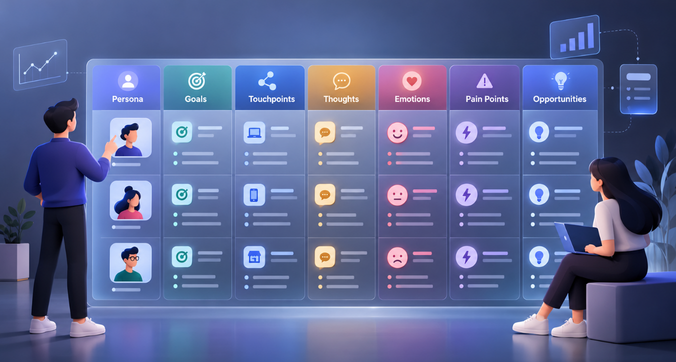
Most journey maps share the same building blocks.
- Customer Persona: The fictional but research-based profile of the customer you are mapping, including their needs and behaviours.
- Customer Goal: What the customer is trying to achieve, such as comparing tools or resolving a billing issue.
- Journey Stages: The phases the customer moves through, from awareness to advocacy.
- Actions: The specific things the customer does at each stage.
- Touchpoints: Every place they interact with your brand: website, email, social media, sales calls, product or support.
- Thoughts and Questions: What the customer is wondering at each step, such as “Is this worth the price?”
- Emotions: How they feel, from curious and confident to confused or frustrated.
- Pain Points: The obstacles, delays or frustrations that make the journey harder.
- Opportunities: Ideas for removing pain points and improving the experience.
What Are the Typical Stages of a Customer Journey?
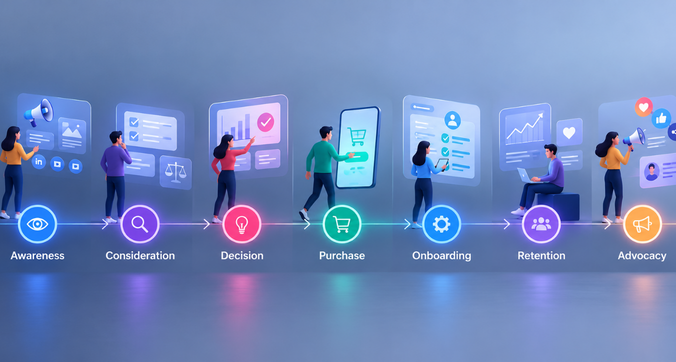
Stages vary by business, but most journeys follow this flow.
- Awareness: The customer realises they have a need and discovers your brand.
- Consideration: They research options and compare you with alternatives.
- Decision: They weigh the final factors, such as pricing, reviews and trust.
- Purchase or Conversion: They buy, sign up or start a trial.
- Onboarding: They learn how to use the product or service and reach first value.
- Retention: They keep using it, and the brand keeps delivering value.
- Advocacy: Happy customers recommend you through reviews and word of mouth.
Customer Journey Map vs User Journey Map
The two terms are often used interchangeably, but they differ in scope.
| Customer Journey Map | User Journey Map |
| Covers the broader relationship with a brand | Focuses more on interaction with a product or service |
| Includes marketing, sales and support touchpoints | Often focuses on product tasks and workflows |
| Can span a long time period | Often focuses on a specific task or scenario |
| Used across multiple teams | Commonly used in UX and product teams |
In practice, many teams start with a customer journey map for the big picture, then create user journey maps to dig into specific product experiences.
How to Create a Customer Journey Map Step by Step
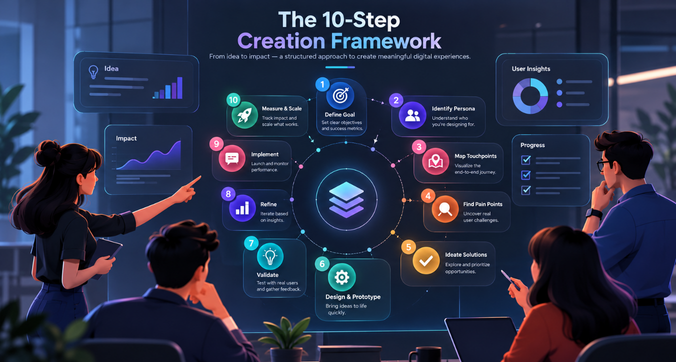
Step 1 – Define the Goal of the Journey Map
Decide what experience you want to understand. Focus on one specific journey, product or customer problem, such as “first-time trial signup” rather than “everything.”
Step 2 – Identify the Target Customer
Choose a single customer segment. Base it on real research, not assumptions about who you think your customers are.
Step 3 – Define the Customer’s Goal
Ask what the customer is trying to achieve. Every step on the map should connect back to this goal.
Step 4 – List the Journey Stages
Outline the stages the customer passes through, for example awareness, consideration, purchase, usage and retention.
Step 5 – Identify Customer Touchpoints
List every place the customer meets your brand: website, search, social media, sales, product, email and support.
Step 6 – Map Customer Actions and Questions
For each stage, note what the customer does and what information they need to move forward.
Step 7 – Add Customer Thoughts and Emotions
Capture how customers feel along the way, whether confusion, confidence, frustration or satisfaction. Emotions often explain drop-offs better than numbers do.
Step 8 – Identify Pain Points
Find where the journey becomes difficult and where customers abandon it.
Step 9 – Find Improvement Opportunities
Turn each pain point into an action: simplify steps, improve information, remove friction or strengthen support.
Step 10 – Validate and Update the Journey Map
Test your assumptions with real users, then revisit the map as customer behaviour changes. A journey map is a living document, not a one-time workshop output.
Simple Customer Journey Map Example
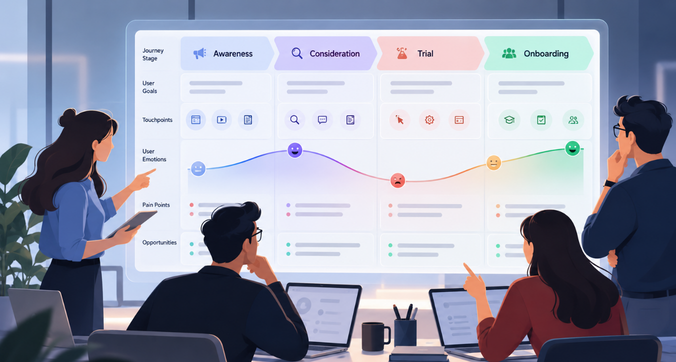
Example: SaaS Product Trial
- Awareness: The user discovers the product through Google.
- Consideration: They visit the website and compare features.
- Decision: They start a free trial.
- Onboarding: They create an account and set up the product.
- Usage: They try the main features.
- Pain point: Setup feels confusing.
- Opportunity: Add guided onboarding and clearer instructions.
- Outcome: The user reaches value faster and is more likely to convert.
This example shows how the components work together: a pain point at one stage points directly to a specific, fixable opportunity.
What Data Should You Use to Build a Customer Journey Map?

A reliable journey map is built on evidence, not team assumptions. Useful sources include:
- Customer interviews
- Surveys
- Analytics
- User recordings
- Support tickets
- Sales feedback
- Reviews
- Usability testing
- Search behaviour
Combining qualitative sources (interviews, tickets) with quantitative ones (analytics, surveys) gives you both the “what” and the “why.”
Common Customer Journey Mapping Mistakes

- Mapping every customer at once. One map should represent one segment.
- Using assumptions instead of research. Internal opinions are not customer data.
- Making the journey too broad. Narrow scope produces sharper insights.
- Ignoring emotions and pain points. These are where the real insights live.
- Focusing only on digital touchpoints. Calls, in-store visits and emails count too.
- Creating the map once and never updating it. Customer behaviour keeps changing.
- Not linking findings to actions. A map that does not lead to improvements is just decoration.
How Customer Journey Maps Improve UX and Business Decisions

When used well, journey maps lead to measurable results. They help teams:
- Improve onboarding
- Reduce friction
- Identify drop-off points
- Prioritise UX improvements
- Align marketing, sales, product and support around one view of the customer
- Improve customer satisfaction and retention
Because the map is shared, it also reduces internal debates. Teams can point to the same evidence and agree on what to fix first.
How f1Studioz Uses Journey Mapping in UX Projects

At f1Studioz, journey mapping is a practical tool in our UX process, not a workshop exercise. Our approach includes:
- Understanding user and business goals
- Mapping complex user journeys
- Identifying friction points
- Analysing key touchpoints
- Improving workflows
- Validating journeys through research and testing
- Applying findings to enterprise and SaaS products
This keeps every design decision tied to real user behaviour and clear business outcomes.
Frequently Asked Questions
What is a customer journey map in simple words?
It is a visual story of the steps a customer takes with your brand, including what they do, think and feel along the way.
What are the stages of a customer journey map?
Common stages are awareness, consideration, decision, purchase, onboarding, retention and advocacy.
What should a customer journey map include?
A persona, goal, stages, actions, touchpoints, thoughts, emotions, pain points and opportunities.
What is the difference between a customer journey map and a user journey map?
A customer journey map covers the broader brand relationship across teams, while a user journey map focuses on a specific product task or workflow.
Why is customer journey mapping important?
It reveals friction points and expectation gaps, helping teams improve experience and make better decisions.
Who should create a customer journey map?
UX, product, marketing, sales and support teams should work on it together, ideally with input from real customers.
What data is needed for journey mapping?
Interviews, surveys, analytics, recordings, support tickets, reviews and usability testing results.
How often should a customer journey map be updated?
Review it at least once or twice a year, and whenever your product, audience or customer behaviour changes significantly.
Final Thoughts
A customer journey map helps you see your product through your customer’s eyes. Its real value comes from research-backed insights, clearly identified pain points and actionable opportunities. If you want expert help turning journey insights into better products, explore the UX/UI design and UX strategy services at f1Studioz.