

Enterprise platforms often contain hundreds of screens built by dozens of teams over many years, and the result is frequently a patchwork product where every module feels like it came from a different company. Buttons behave differently across sections, navigation shifts without warning, and teams quietly rebuild the same components because nobody knows one already exists. Without a shared system, organizations burn time recreating work that already exists, while users navigate interfaces that behave unpredictably as they move through the product.
As enterprise products scale across teams, modules, and time, keeping the experience consistent becomes exponentially harder to do by hand. What used to be a “nice-to-have” for design-forward companies has become essential infrastructure for any enterprise trying to build software that’s scalable, maintainable, and genuinely usable.
The Problem: Enterprise Products Grow Messy by Default
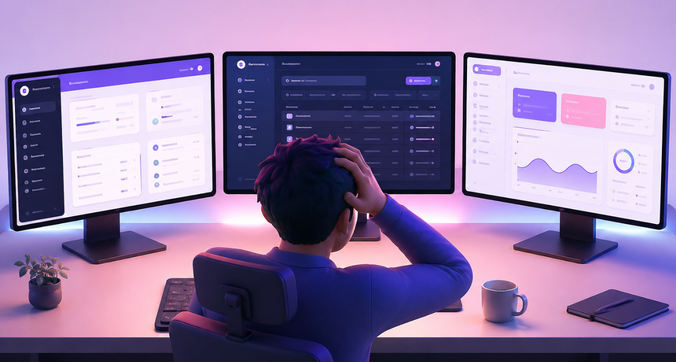
Enterprise software rarely gets built in one clean pass. It grows organically as new features get bolted on by different teams, modules get absorbed through acquisitions, and priorities shift across years. Without a design system holding it together, this creates familiar problems:
- Inconsistent UI patterns that confuse users moving between sections
- Duplicated design and engineering effort as teams rebuild the same components
- Fragmented experiences where each module behaves like its own product
- Accumulating design debt as one-off solutions multiply
- Slower feature development because standard patterns get custom-built every time
- Accessibility gaps that vary depending on which team built which screen
- Difficult onboarding for new hires with no standard patterns to learn from
- Brand inconsistency that chips away at professional credibility
The cumulative effect is expensive: teams keep solving the same problems from scratch, users face steep learning curves, and technical debt compounds until improvements get harder and costlier. Most organizations only notice how bad it’s gotten after years of drift, by which point fixing it costs far more than building it right would have.
The Solution: A Shared Design Language at Scale

An enterprise design system gives every team a shared design language – reusable components, design tokens, governance frameworks, and collaboration processes – that makes consistent, scalable development possible across teams and time. Done well, it delivers:
- Consistent experiences across every product touchpoint
- Reusable components that speed up design and development
- Clear standards that cut down on repetitive decision-making
- Governance that protects quality as the system grows
- Shared infrastructure connecting designers and developers
- Accessibility built directly into shared components
- Scalability that doesn’t require proportional increases in headcount
The payoff is lower costs, better quality, faster delivery, stronger user experiences, and a foundation that can support the product for years.
Understanding Enterprise Design Systems
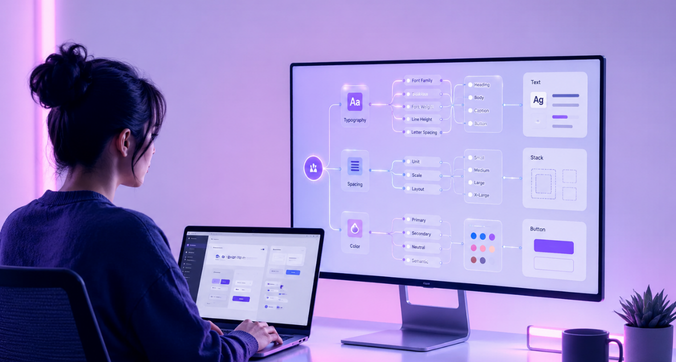
A design system is a collection of reusable components, design standards, usage guidelines, and governance processes that make consistent product development possible at scale – a component library, design tokens, a pattern library, usage guidelines, and a governance framework working together as the single source of truth every team builds from, instead of each team improvising its own variation.
Enterprise systems differ meaningfully from consumer product systems. They need to support far greater complexity – multiple product lines, diverse user roles, white-labeling, legacy integrations, and lifecycles stretching across many years – which demands stronger governance and more flexibility than a system built for one focused consumer app.
Most enterprises don’t start with a formal system. They start with ad-hoc components that gradually evolve as scaling pain becomes impossible to ignore, moving from individual components to informal team-level sharing to an organization-wide system with dedicated ownership. Investing proactively is almost always cheaper than untangling years of accumulated inconsistency later.
Why Enterprise Products Specifically Need Design Systems

Managing complexity across teams and modules. When dozens of teams build hundreds of features across multiple product lines at once, a shared system prevents fragmentation. Without it, every team builds a slightly different version of the same thing, and users pay the price in confusion.
Supporting long product lifecycles. Enterprise products evolve over years or decades, so consistency has to be sustainable. Versioning, deprecation, and migration paths let a system evolve in a controlled way instead of accumulating debt that eventually forces an expensive redesign.
Enabling scale without proportional cost. Reusable components speed up development, shared standards cut decision fatigue, and centralized maintenance means fixes propagate everywhere at once. Organizations without a system see costs climb as teams and products multiply.
Ensuring accessibility compliance. Building accessibility into shared components – keyboard navigation, screen reader support, color contrast, ARIA attributes – means compliance happens by default rather than depending on individual teams getting it right.
Maintaining brand consistency. Organizations with multiple products, white-label offerings, or acquired platforms often struggle to present a coherent brand. Design tokens and consistent component behavior tie it back together, protecting the credibility a fragmented experience would otherwise undermine.
Core Components of an Enterprise Design System
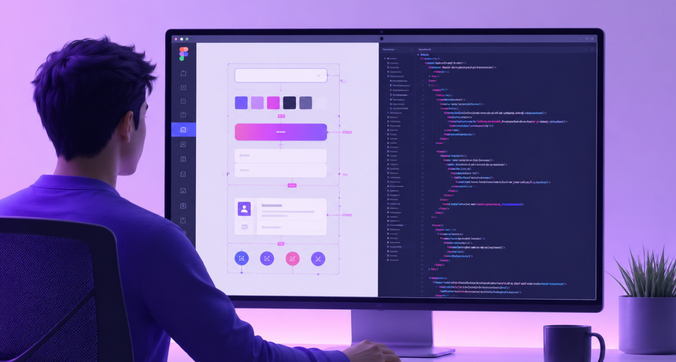
A mature system usually includes design tokens – variables for colors, typography, spacing, and effects that update centrally and propagate everywhere, enabling theming and white-labeling without touching component code. It needs component libraries covering navigation, forms, data tables, modals, buttons, and feedback mechanisms, built to handle enterprise complexity like bulk actions and role-based views. Documentation explaining each component’s purpose, implementation, and accessibility requirements – including when not to use it – is just as important, since without it teams misuse components or build their own variations. And tooling integration with the platforms teams already use (Figma, Sketch, React, Angular) keeps design and code in sync and speeds up handoff.
Governance: The Part Most Systems Get Wrong

A design system without governance eventually falls apart – teams create exceptions, variations multiply, and the system quietly gets abandoned. Good governance defines who can contribute, how changes get approved, and how standards evolve, balancing structure with enough flexibility for legitimate new needs. That means clear decision-making authority, a defined review process for new components, careful versioning so updates don’t break existing implementations, and ongoing measurement of usage rates and adoption to track whether the system is actually delivering value.
The Benefits Compound Over Time
A well-run system accelerates development velocity, since teams stop rebuilding standard patterns from scratch, and improves product quality, since centrally built and tested components are more reliable than distributed, individually-built ones. It reduces design and technical debt by preventing the one-off sprawl that eventually requires expensive remediation, strengthens cross-team collaboration by giving teams a shared vocabulary, and improves the user experience itself – consistent interfaces mean learned patterns transfer across the product, reducing cognitive load.
Common Challenges Organizations Face
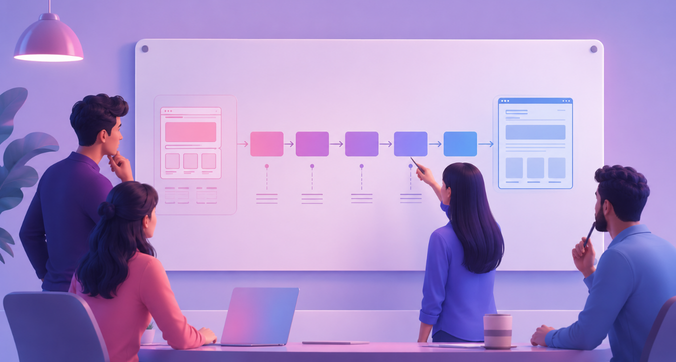
None of this happens automatically. Organizations struggle to secure resources and buy-in for a system that competes with feature work for budget, and to balance standardization with legitimate product differentiation – too rigid, and teams route around the system; too flexible, and it fragments anyway. Legacy integration is its own challenge, since most enterprises can’t migrate everything at once and need gradual, prioritized paths instead. Momentum is fragile too – many efforts lose steam after launch without dedicated resources and visible sponsorship – and governance has to evolve as the system matures, since processes that work for a small system become bottlenecks once dozens of teams are contributing.
Best Practices for Building a System That Lasts

Successful organizations start with research – auditing existing products and talking to designers and developers about actual pain points rather than designing for a theoretical ideal. They start small, proving value with a handful of high-impact components before expanding scope, rather than attempting a comprehensive launch that overwhelms everyone. They build tight collaboration between design and development so specs match what ships, invest in documentation and evangelism (since even a great component library goes unused if nobody knows it exists), and treat the system as a living product requiring ongoing maintenance and measurement – not a one-time project that ships and gets forgotten.
How f1Studioz Approaches Enterprise Design Systems
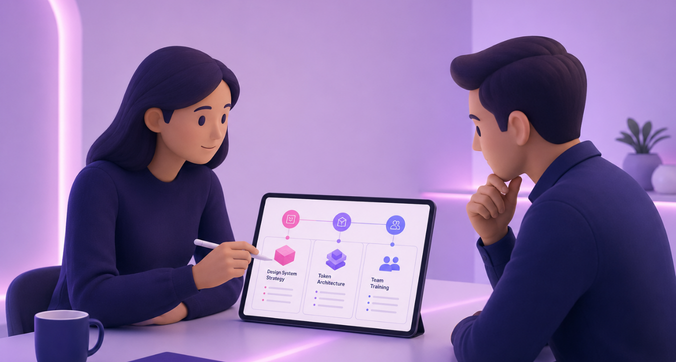
F1 Studioz specializes in building enterprise design systems for complex business applications across SaaS platforms, financial services, healthcare, manufacturing, and enterprise software. Our services span design system strategy and roadmapping, component library development for design and code, design token architecture, governance framework establishment, documentation, team training, migration planning for legacy products, and ongoing maintenance partnerships – helping organizations cut costs, ship faster, and build a scalable foundation for their entire product portfolio.
FAQs
What is an enterprise design system?
A collection of reusable components, design standards, usage guidelines, and governance processes that enable consistent product development across teams and time, including component libraries, design tokens, pattern documentation, and frameworks that ensure quality as the organization scales.
Why do enterprise products need design systems more than consumer products?
Enterprise products involve more teams building across longer timeframes with far greater complexity, making manual consistency impractical. Diverse user roles, multiple modules, legacy integrations, and extended lifecycles all require systematic approaches to stay coherent and avoid fragmentation.
What are the main benefits of enterprise design systems?
They accelerate development, improve quality through expert centralized implementation, reduce design and technical debt, strengthen cross-team collaboration, help ensure accessibility compliance, maintain brand consistency, and create better user experiences through predictable interface patterns.
How do you get organizational buy-in for design system investment?
Demonstrate ROI with concrete metrics – reduced development time, improved quality, lower remediation costs, faster onboarding. Start small, prove value before requesting larger investment, and frame the system as infrastructure supporting business goals rather than a purely design-driven exercise.
What are common challenges building enterprise design systems?
Securing adequate resources and buy-in, balancing standardization with legitimate product differentiation, integrating with legacy systems, maintaining momentum so the system doesn’t get abandoned, and scaling governance as the system and its contributor base grow.
How long does it take to build an enterprise design system?
An initial system focused on core components typically takes 3–6 months, though comprehensive systems continue evolving over years. The best approach delivers incremental value rather than one comprehensive launch – design systems require ongoing maintenance, not a one-time build.
Final Thought
As enterprise products grow more complex, teams become more distributed, and user expectations keep rising, organizations without a systematic approach to consistency face escalating costs and compounding disadvantages. A design system is a strategic investment in sustainable product infrastructure – one that lets enterprises scale efficiently, maintain quality, and deliver consistent experiences across a growing product portfolio.
If fragmentation and redundant work are slowing your teams down, F1 Studioz can help with design system strategy, component library development, governance framework design, or migration planning – turning an inconsistent product portfolio into a cohesive, scalable system.