
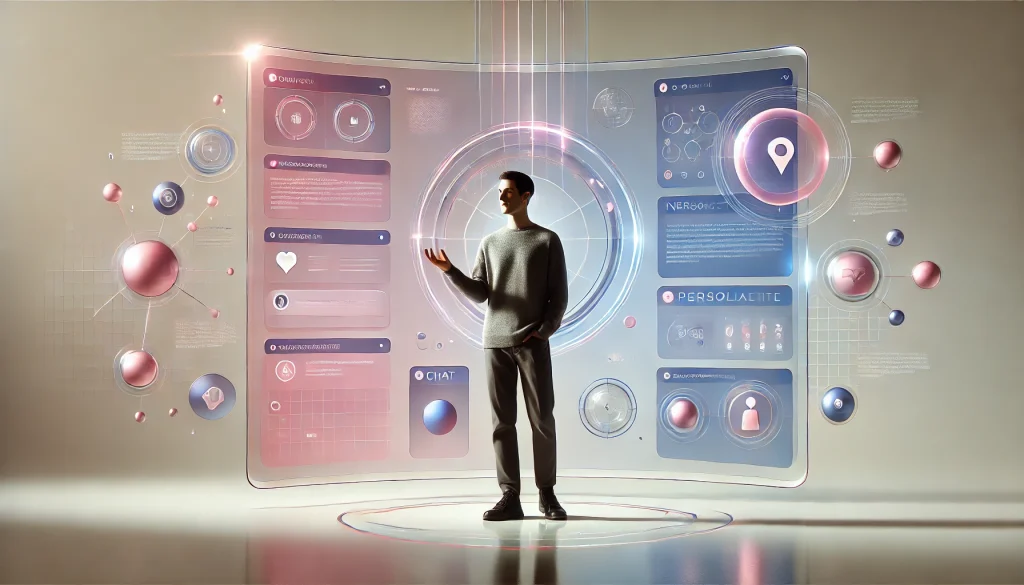
Your website is no longer just a digital brochure. It’s one of your most important growth engines. Customers today expect personalized experiences, instant responses, relevant information, and frictionless interactions. That’s where AI integration for websites can make a real difference.
AI doesn’t replace great design, clear content, or strong messaging. Instead, it can make these elements more effective by helping websites understand visitors, personalize content, automate interactions, and improve conversions. Businesses exploring these experiences can also learn more about UX Design for AI and how AI-first interfaces can be designed around user needs.
What Is AI Integration for Websites?
AI integration for websites means adding artificial intelligence capabilities that help a website understand visitors, personalize content, automate interactions, and support business goals. With AI website integration, businesses can create more responsive and AI-powered websites that adapt to user needs instead of delivering the same experience to everyone.
From intelligent search and conversational AI to predictive analytics and personalized recommendations, these features can improve the overall user experience while supporting lead generation and conversions.
For a broader understanding of this approach, explore our guide to user experience for AI solutions.
Let’s explore seven practical ways to integrate AI into your website and boost sales.
1. Personalized Landing Pages

Every visitor comes to your website with a unique intent. A first-time visitor may just want to learn about your offering, while a returning customer might be comparing pricing. Instead of showing everyone the same page, AI enables you to personalize landing experiences.
By analyzing factors like referral source, location, browsing history, and previous interactions, AI tools can adapt headlines, CTAs, and offers in real time. This level of personalization makes visitors feel understood and can improve engagement and conversions.
This approach is also known as AI website personalization, where AI uses available visitor signals to create a more relevant experience. Delivering personalized content and real-time experiences can help businesses guide visitors toward the next step in the sales funnel.
For more insights into how AI changes digital experiences, read What Is AI UX and Why Does It Matter for Business?.
Example tools: Mutiny, Adobe Target, Clearbit.
2. Smarter Search and Recommendations

Traditional site search often fails when users type in broad or unclear queries. AI-powered search changes that by understanding intent instead of relying only on keyword matches.
An intelligent search system can understand natural-language queries and connect visitors with the information they actually need. For example, someone searching for “affordable app design” could be shown relevant services, case studies, or guides instead of being sent to a generic search-results page.
AI can also power recommendation engines that analyze user intent and behavior to suggest relevant products, services, articles, or case studies. These AI-driven recommendations can encourage users to explore more of the website and move closer to conversion.
These recommendation-driven experiences are part of the broader shift toward AI-powered user experiences, where interfaces can respond to user intent and behavior.
Example tools: Algolia AI, Elasticsearch + GPT.
3. Conversational Chatbots

AI-powered chatbots have evolved far beyond scripted FAQs. Today, conversational AI can answer questions, understand context, qualify leads, schedule demos, and recommend products or services.
The biggest advantage? They work 24/7. Even when your team is offline, a well-designed chatbot can ensure visitors receive immediate assistance.
This is where conversational AI becomes especially valuable. Instead of following a fixed question-and-answer flow, an AI chatbot can understand context, respond naturally, and support lead qualification before passing high-intent prospects to the sales team.
For a deeper look at this type of experience, explore AI conversational interfaces for SaaS products.
Example tools: Intercom Fin, Drift, custom GPT-based bots.
4. Dynamic Pricing and Offers

Not every customer responds to the same offer. AI can help tailor pricing, promotions, and calls to action depending on user behavior, purchase history, or intent signals.
For example, a first-time visitor might see a special welcome offer, while a returning enterprise lead could be shown a “Schedule a Call” CTA instead of fixed pricing.
These are examples of AI-powered website features designed around user intent. When offers are matched with the visitor’s stage in the buying journey, businesses can support conversion rate optimization while keeping the experience relevant.
The goal isn’t simply to show more discounts. It is to show the right message to the right visitor at the right stage.
Example tools: Pricemoov, BlackCurve, or custom rule-based systems.
5. Guided Forms and Lead Capture

Nobody enjoys filling out long, static forms. AI can help transform form filling into a conversational, guided experience.
Instead of overwhelming visitors with endless fields, you can start with minimal questions and progressively capture details based on user responses.
This approach can make forms easier to complete while helping businesses collect more useful information for their sales pipeline.
AI can also support AI-powered lead generation by identifying useful information from conversations and interactions. Instead of asking every visitor to complete the same form, a guided experience can focus on the questions that matter most for lead qualification.
For more information about designing effective AI interactions, explore AI UX design principles.
Example tools: Typeform + GPT, Landbot, Outgrow.
6. Predictive Analytics
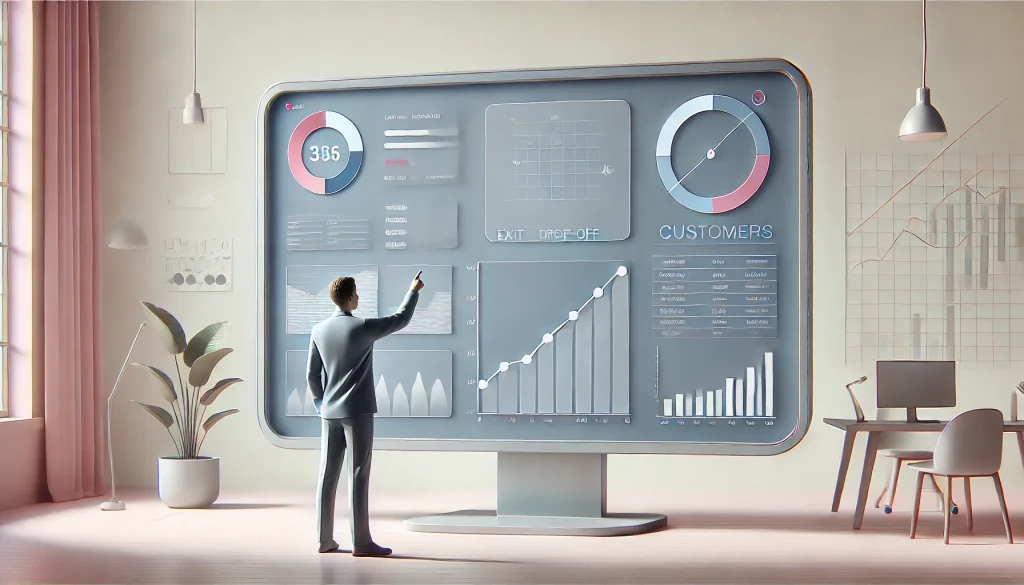
What if you could identify when a user is likely to leave your website or recognize when someone is showing strong purchase intent? With AI-driven predictive analytics, businesses can analyze patterns and respond earlier.
By analyzing signals such as time spent on pricing pages, repeated visits, scrolling behavior, and other interactions, AI can identify patterns that may indicate interest, hesitation, or potential drop-off.
These systems rely on user behavior analysis to understand what visitors are doing on a website. This allows businesses to respond based on actual behavior rather than assumptions.
For example, a website could trigger a helpful chatbot when a visitor repeatedly views pricing information or provide a relevant reminder before the user leaves.
Predictive features are most effective when users can understand and trust the information they receive. Learn more about explainable AI design and how transparent AI experiences can support user confidence.
Example tools: Mixpanel AI, Pendo, Google Analytics + ML models.
7. Retargeting and Email Automation

Not all visitors convert on their first visit. That’s why retargeting and follow-up are important parts of the customer journey.
AI can make this process smarter by segmenting audiences, predicting the right time to reach out, and tailoring messages to individual preferences.
Whether it’s an abandoned-cart email, personalized product recommendation, or targeted advertising campaign, AI helps businesses stay relevant and bring users back to continue their journey.
Combined with AI website automation, these workflows can create a connected customer experience across websites, email, and advertising channels. AI can determine which message, offer, or recommendation may be most relevant based on previous interactions.
These personalized journeys become even more valuable when they are connected to a broader SaaS UX strategy.
Example tools: HubSpot AI, Mailchimp AI, Meta Advantage+.
How to Integrate AI Into a Website
The best way to integrate AI into a website is to start with a specific business or user-experience problem rather than adding AI simply because it is popular.
Identify where visitors are dropping off, what questions they frequently ask, or which parts of the customer journey require repetitive manual work.
From there, choose an AI feature that solves that problem. A business might start with an AI chatbot for customer support, intelligent search for content discovery, personalized landing pages for different audiences, or predictive analytics for understanding website conversions.
A practical AI integration for business websites can follow these steps:
- Identify a specific user or business problem.
- Select the AI capability that addresses it.
- Connect the AI solution with relevant website data and systems.
- Test the experience with real users.
- Track engagement, leads, and conversions.
- Improve the system based on performance.
Starting small makes it easier to measure results before expanding AI across other areas of the website.
Once the AI experience is defined, strong front-end engineering is also important for turning those experiences into responsive, scalable interfaces.
Frequently Asked Questions
How can AI be integrated into a website?
AI can be integrated into a website through features such as AI chatbots, intelligent search, personalized content, recommendation engines, predictive analytics, automated lead capture, and personalized offers.
How does AI improve website conversions?
AI can improve website conversions by understanding visitor behavior, personalizing content, recommending relevant services or products, answering questions instantly, and identifying high-intent visitors.
How can AI help generate more website leads?
AI can help generate leads through conversational chatbots, guided forms, personalized calls to action, automated lead qualification, and predictive analysis of visitor behavior.
What AI features can be added to a website?
Common AI-powered website features include conversational chatbots, intelligent search, personalized landing pages, recommendation systems, predictive analytics, automated forms, and personalized marketing.
Is AI integration useful for business websites?
Yes. AI integration for business websites can help businesses automate customer interactions, personalize user experiences, improve lead generation, and make website experiences more relevant to visitors.
How do I make my website AI-powered?
Start by identifying one area that could benefit from automation or personalization. You can then add an AI chatbot, intelligent search, personalized content, predictive analytics, or another suitable AI feature and measure its impact before expanding further.
How much does it cost to add AI to a website?
The cost depends on the AI feature, level of customization, data requirements, integrations, and development complexity. A simple chatbot generally requires less investment than a fully customized AI-powered website system.
Final Thoughts
AI is not a silver bullet. Your website still needs strong design, compelling copy, and a smooth user journey. But when used correctly, AI can make these elements work harder by adding personalization, intelligence, and adaptability.
The goal of AI for website optimization is not to add technology for its own sake. It is to make website interactions more useful, relevant, and connected to the needs of your users.
The key is to start small: pick one or two strategies, measure their impact, and scale gradually. Over time, your website can evolve from being simply informative into a more intelligent digital experience and a stronger sales driver.
Also Read: The Evolution of Front-End Development: Trends to Watch in 2025
Work Smarter With AI.